Whot Pick Three Strategy: When to Play the 5 Card and When to Save It
Learn how Pick Three works in Nigerian Whot, when to play the 5 card, how house rules affect stacking, and how to use it without wasting pressure.
In many Nigerian Whot games, the 5 card is called Pick Three. When it is played, the next player usually has to draw three cards from the market unless the table allows a defensive response. The best time to play it is when the next player is close to finishing, weak on the active shape, or already under pressure.
Last updated: 22 July 2026
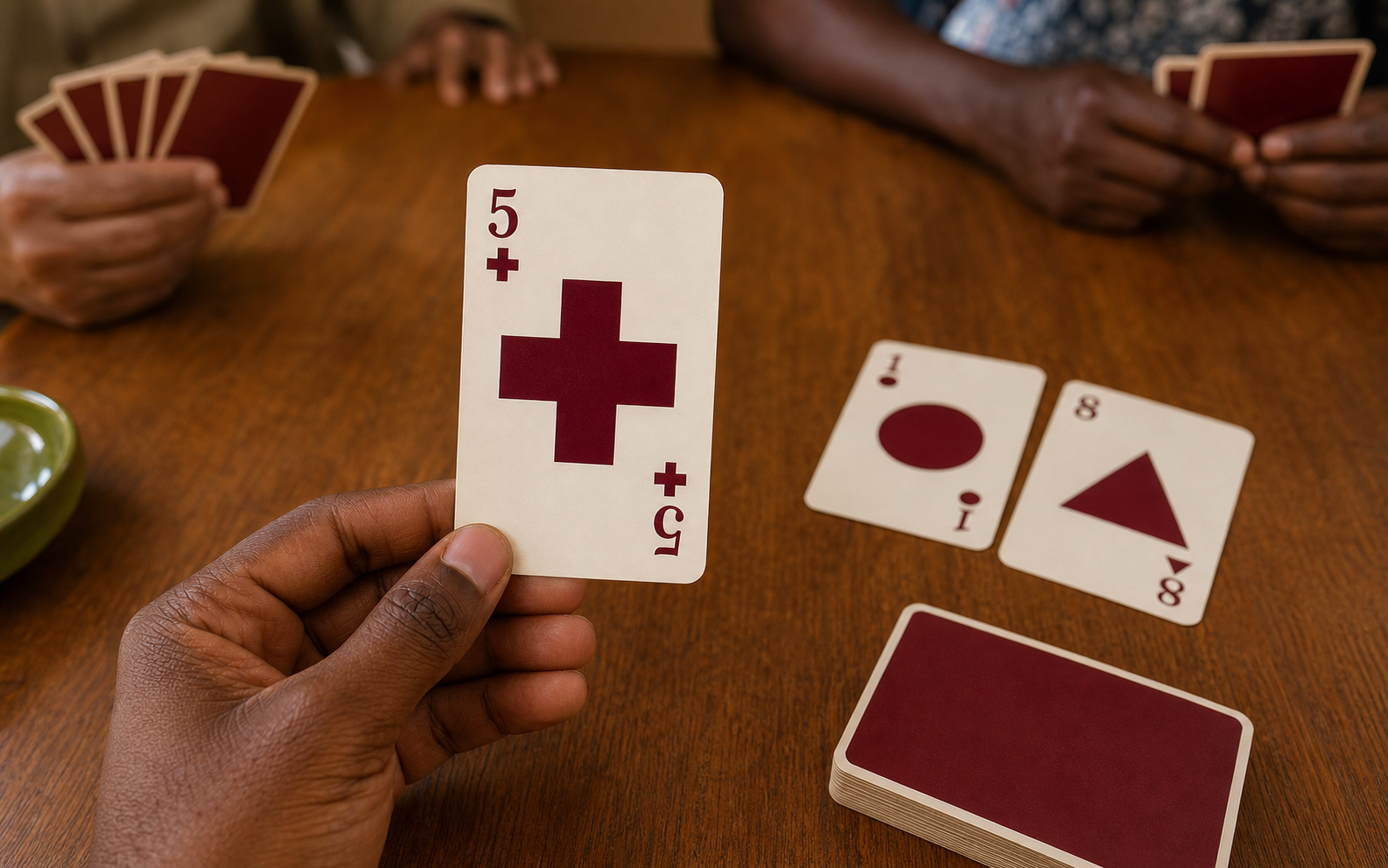
What does Pick Three mean in Whot?
Pick Three is the common name for the 5 card at many Nigerian Whot tables. When you play a 5, the next player must pick three cards from the market.
Some tables allow the next player to defend with another 5 and push the penalty forward. Some tables do not allow stacking at all. Because Whot has many house rules, agree on this before the game starts. It saves argument when the round becomes hot.
For WhotGuide examples, we explain the rule clearly before each challenge or demo. If you are playing with friends, do the same at the table.
Why Pick Three hurts more than it looks
Pick Three is powerful because it does two things at once:
- It increases the next player's hand by three cards.
- It delays that player's chance to finish the round.
The second part is the real pressure. If a player has only one or two cards left, forcing them to draw three cards can completely reset their position. They may go from almost winning to having to manage a messy hand again.
This is why Pick Three is especially dangerous near the end of a round. Early in the game, three extra cards are annoying. Late in the game, three extra cards can be the difference between winning and watching somebody else clear their hand.
Best times to play the 5 card
1. When the next player is close to finishing
If the next player has called Last Card, or they are clearly down to two cards, Pick Three becomes a direct defensive weapon.
Do not waste it on a player with eight cards unless there is another reason. Use it when the punishment changes the outcome of the round.
2. When the next player has shown weakness on the active shape
If Circle is active and the next player recently had to go to the market, that is useful information. It may mean they did not have Circle or a matching number at that moment.
If you can keep the table on that shape and then hit them with Pick Three, the pressure becomes stronger. They may have fewer ways to answer.
Treat this as a clue, not proof. A player can draw a useful card from the market, and some tables allow voluntary draws. Still, visible behaviour gives you better decisions than blind guessing.
3. When multiplayer turn order helps you
In a 4-player game, Pick Three is not only about the next player. It is also about who gets protected and who gets exposed.
If the player after you is the biggest threat, Pick Three is perfect. If the player after you is far behind, you may be wasting a good card while the real danger waits two seats away.
Before playing the 5 card, look around the table. Who has the fewest cards? Who is holding their cards confidently? Who has been forced to market more than once? Whot is a card game, but the table tells stories.
When you should save Pick Three
Do not play the 5 card just because it is available. Sometimes saving it is the smarter move.
Save your 5 when:
- It is your only card in that shape.
- The next player may be able to defend with another 5 under your table rules.
- You need it as a bridge to keep your hand flexible.
- A more dangerous player is coming later in the turn order.
- You are close to finishing and do not want to give the table a chance to reset.
The 5 card is pressure. Good pressure has timing.
The stacking question: can another 5 block Pick Three?
This is one of the most common Whot arguments. At some Nigerian tables, if Player A plays a 5, Player B can respond with another 5 and pass six cards to Player C. At other tables, Player B must pick three immediately.
Neither table should pretend the other one does not exist. The practical rule is simple: agree before play.
Are we stacking Pick Three, or once 5 lands, the next player must pick?
That one sentence can save ten minutes of argument later.
Common mistake: using Pick Three too early
Many beginners play Pick Three as soon as they get the chance. It feels strong, so they use it immediately.
The problem is that early pressure is often easy to survive. A player with many cards can absorb the punishment and continue. A player with one card cannot.
If you want Pick Three to win games, do not only ask, Can I play it now? Ask, Will this hurt the right player at the right time?
Quick checklist
- Is the next player close to finishing?
- Has the next player struggled with this shape?
- Does my table allow Pick Three stacking?
- Am I wasting pressure on the wrong player?
- Will saving this card give me a better route later?
Keep practising
To understand the full special-card system, read Whot special cards. To practise decisions in a free demo, try Whot vs Bot. For more table examples, see Whot real game examples.
FAQ
Is 5 always Pick Three in Whot?
In many Nigerian Whot games, 5 is played as Pick Three. Some apps or tables may use different rules, so always check the rule set before play.
Can Pick Three be stacked?
It depends on the house rules. Many casual tables allow another 5 to defend and pass the penalty forward. Other tables make the next player pick three immediately.
Should I play Pick Three as soon as possible?
Not always. Pick Three is strongest when it stops a player who is close to winning or when it attacks a player who has already shown weakness on the active shape.