Whot Same Number Strategy: How Number Matching Changes Your Game
Learn how matching by number can help you switch shape in Whot, build safer follow-ups, and avoid getting trapped with one useless shape.
A same-number switch happens when you use a card with the same number as the table card to move the active shape into a better one for your hand. It is not the same as Whot 20. It is a legal matching idea that helps you escape a bad shape and create a safer next move.
Last updated: 30 July 2026
What is a same-number switch?
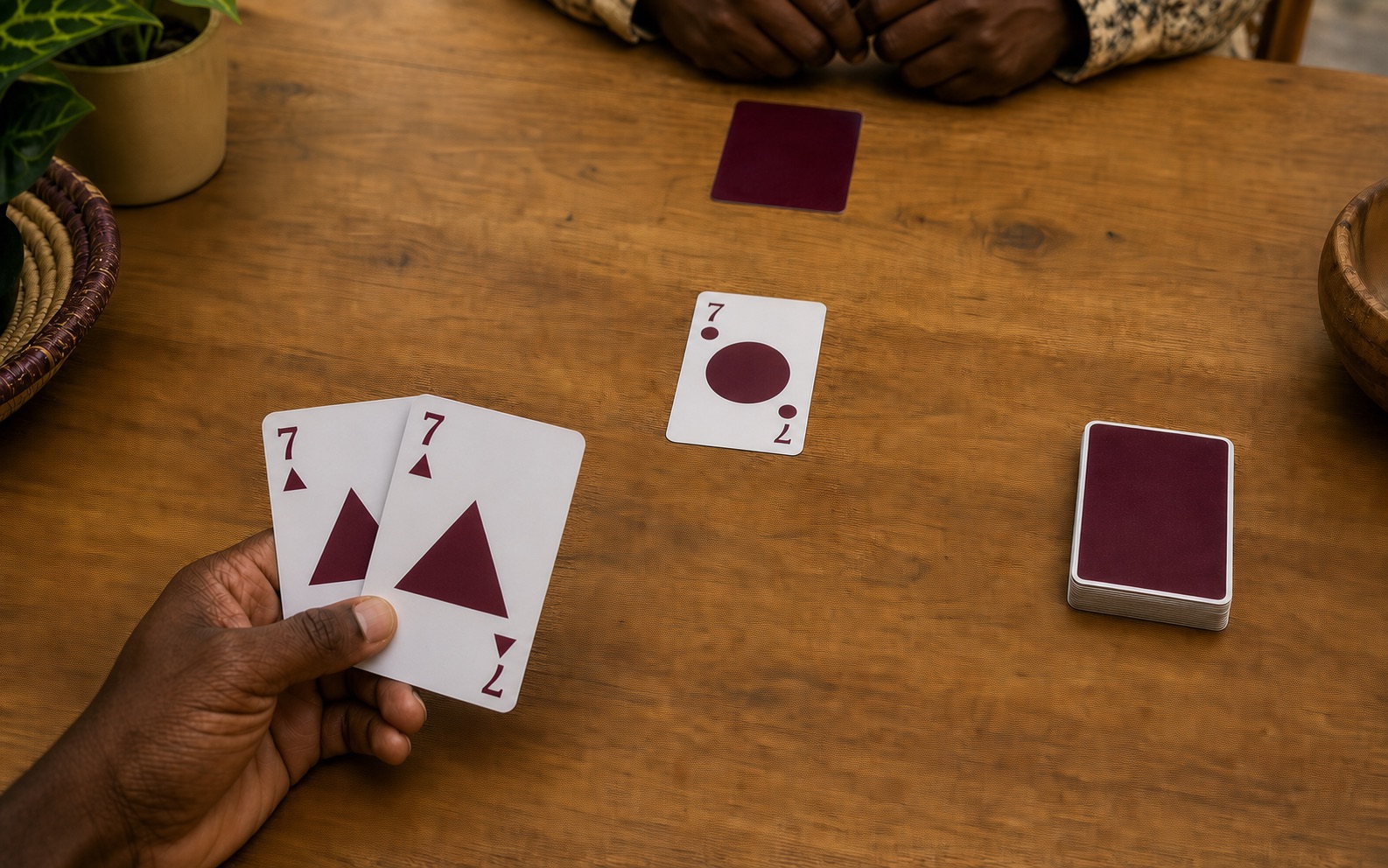
A same-number switch means playing a card that matches the table number but has a different shape. If the table card is Circle 7 and you play Triangle 7, the move is legal because the number matches, and Triangle becomes the active shape.
That small change can rescue a hand by moving the game from a shape you do not like into a shape that gives you more options.
Why it matters
Whot is not only about playing any legal card. It is about leaving yourself a useful next position. If you only follow the current shape, you may empty one part of your hand and get trapped later. Same-number switches let you move the round toward cards you can still use.
Same-number switch vs Whot 20
| Move | What it does |
|---|---|
| Whot 20 | Usually lets the player choose the next shape |
| Same-number switch | Changes the active shape by playing the same number in another shape |
Same-number switching is less dramatic, but many rounds are shaped by these smaller moves rather than a single powerful card.
When should you use same number?
Good situations
- The current shape does not help your hand.
- The new shape gives you follow-up cards.
- An opponent is close to finishing and you need control.
Bad situations
- You switch without a next move.
- You change into a shape that helps the next player.
- You change shape randomly without checking your hand.
Example: turning a bad shape into your shape
Imagine the table shows Cross 10 and you hold Circle 10, Circle 4, and Circle 13. Playing Circle 10 is not only a legal move: it changes the active shape to Circle, where your next cards are stronger.
The best switch is not the one that looks clever. It is the one that gives you a follow-up.
Use it with Hold On
Suppose the table shows Cross 14 and you hold Cross 1 and Circle 1. Cross 1 matches by shape and, where 1 is Hold On, keeps your turn open. Circle 1 then matches by number and moves the table to Circle. A small number bridge can shift the whole round into your preferred shape.
Common mistake: switching into nowhere
Do not switch shape simply because you can. If Triangle 7 leaves you with no Triangle cards and no useful number connection, you may have helped the next player more than yourself.
- Does the new shape help my hand?
- Does it make the next player uncomfortable?
- Do I have a follow-up if the table changes again?
Same-number switch in online Whot apps
Most Whot apps allow matching by shape or number, but special cards, forced draws, and turn continuation can differ. Check the app rule page or practise in a free round before relying on a strategy.
Key Takeaways
- Same-number cards can change the active shape without Whot 20.
- The best same-number move gives you a follow-up, not only a legal play.
- Good Whot strategy considers the next turn before the current card.
Keep practising
Read Whot special cards, then try the idea inside Whot real game examples.
FAQ
Is same-number switching a special rule?
No. It comes from the normal matching rule: a card can match by shape or by number. The strategy is knowing when a number match changes the active shape in your favour.
Is this the same as Whot 20?
No. Whot 20 usually lets a player call a shape. Same-number switching changes shape through the card actually played.
Can I play several same-number cards at once?
Only if your table or app allows that. In many games, players use one card unless a special card lets them continue. Agree on the rule before play.