Playing the Player, Not Just the Cards: Baiting and Penalty Management in Whot
Learn how baiting works in Whot, how to force key cards, and how penalty management helps you lose small when you cannot win the round.
Baiting in Whot means using legal moves to make an opponent spend an important card at the wrong time. Penalty management means reducing the damage when you are unlikely to win a round. Together, these skills help you win longer games, not just one lucky hand.
Last updated: 22 July 2026
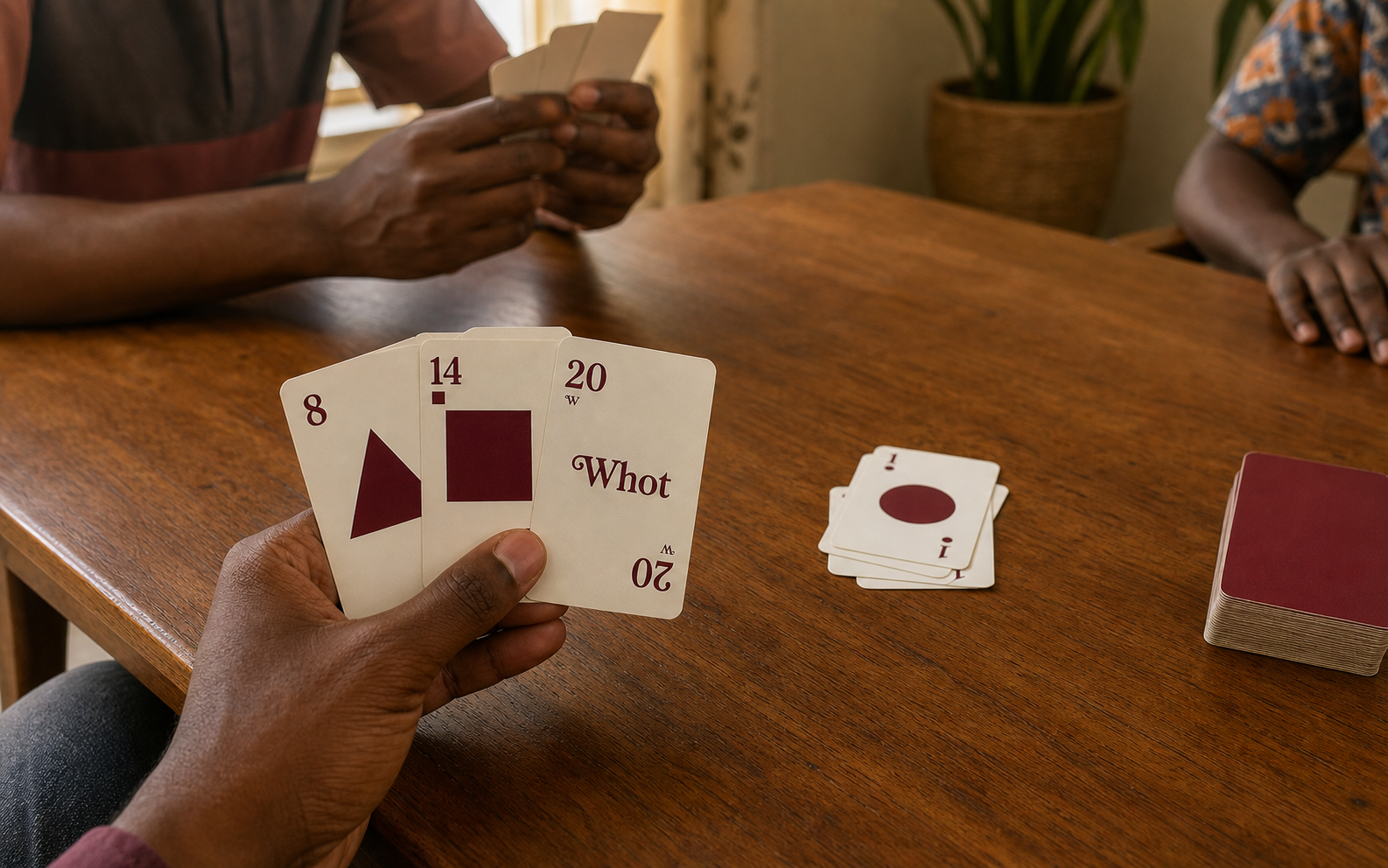
What baiting means in Whot
Once you understand shapes, numbers, Hold On, Suspension, Pick Two, Pick Three, and Whot 20, the next level is not more rules. It is reading the table.
Good players do not only ask, What card can I play? They ask, What will this make the next player do?
Baiting is not cheating, hiding cards, or arguing rules. It is using normal legal play to invite a reaction from your opponent.
Maybe you want them to waste a Whot 20 too early. Maybe you want them to play their only Hold On. Maybe you want them to reveal that they cannot handle a particular shape. The move itself must be legal. The pressure comes from timing.
Example: baiting out Whot 20
Imagine you suspect your opponent is saving a Whot 20. You cannot know for sure, but their play suggests it. They are relaxed when the shape changes, and they do not seem worried about being stuck.
You have two Circle cards and one Triangle card. Instead of rushing, you keep the hand flexible. On your turn, you play a Circle card. Later, you play another Circle card and leave the table looking like Circle is no longer useful for you.
Your opponent may think a Whot 20 call will block you. If you still have a way to respond, you made them spend the strongest flexible card while keeping yourself alive after the shape changes.
You did not force them with words. You forced them with the shape of the game.
Use pressure, not noise
At many tables, players talk. That is part of the fun. But strategy should not depend on shouting or confusing people.
The cleanest bait is built from the cards:
- Repeat a shape until the opponent feels uncomfortable.
- Keep one hidden route by number.
- Make a player choose between saving a key card and protecting the round.
- Let an impatient player spend a strong card before the final stage.
If the plan only works because the table is distracted, it is not reliable strategy. If it works because your cards created a hard choice, that is real Whot.
Shape pressure is the safest kind of bait
The easiest way to bait is through shape pressure. If a player has already gone to the market when Cross was active, you may try to bring Cross back later. If they still cannot respond, they may be forced to use a special card, a Whot 20, or another emergency move.
Again, market behaviour is a clue, not a guarantee. But Whot rewards players who notice small signs.
Do not over-bait
Some players lose because they try to be too clever. They spend three turns setting a trap, then someone else wins before the trap matters.
Bait only when your own hand can survive the result. If you are holding disconnected cards and no follow-up, do not invite chaos. Keep it simple, reduce your risk, and look for a cleaner route.
Strong play is not always fancy. Sometimes the best move is just the card that leaves you with two legal options next turn.
Penalty management: how to lose small
You will not win every round. That is normal. The better question is: when you are losing, how expensive will the loss be?
Many Whot games use scoring after a player finishes. The exact score values can vary by table. In many versions, Whot 20 and other high cards are expensive to keep, so players try not to be caught holding them at the end.
Before a serious game, confirm the scoring rule. Do not assume every table counts cards the same way.
When the round is slipping away
If another player is clearly close to finishing and you cannot stop them, your goal changes. You are no longer playing only to win that round. You are playing to protect your total score.
That means:
- Drop high-value cards when you get the chance.
- Avoid holding Whot 20 until the final moment if scoring makes it costly.
- Keep a low card if it gives you flexibility, but do not protect a high card for a dream combo that may never come.
- Use Hold On or Suspension to reduce danger, not to show off.
In a long game, a small loss is still a good result. The player who loses small again and again can beat the player who wins one round but takes heavy penalties in the next.
Simple decision table
| Situation | Better decision |
|---|---|
| Opponent may be saving Whot 20 | Keep a response route before you pressure them |
| You are behind and another player is close to finishing | Reduce high-value cards first |
| A player has shown weakness on one shape | Bring that shape back if it also helps your hand |
| Your hand has no clear follow-up | Do not create chaos; keep the safest legal route |
| Scoring rules are unclear | Confirm them before play |
Keep practising
Start with Whot hand management, then review Whot special cards. To test your decisions in a simple game flow, try Whot vs Bot.
FAQ
Is baiting allowed in Whot?
Yes, if it is done through legal play. Baiting means creating pressure with your cards, not breaking rules or misleading players about the agreed rule set.
How do I know if someone has Whot 20?
You usually do not know for certain. Watch how they react to shape changes, whether they avoid risky plays, and whether they seem comfortable when the table becomes difficult. Treat those signs as clues only.
What is penalty management?
Penalty management is the habit of reducing the score damage when you cannot win a round. It usually means getting rid of expensive cards and keeping your hand flexible before another player finishes.